Page 7 of 77

The Importance of Sharing Your Journey
You know all the struggles you have experienced, or those issues life has thrown your way that you are afraid to reveal? Being transparent about them could help a lot of people who are dealing with similar things. It makes them realize there is hope, and it helps them feel less alone. Your transparency will also help you know that many others are dealing with burdens just like yours.
I don’t usually post about my mental struggles because I don’t want to burden anyone, but a recent experience taught me how wrong I was. Three years ago, I had my first A-fib episode (irregular heartbeat). After many tests and a short time taking a beta blocker, I went two years without any episodes. Unfortunately, the episodes started again recently and became more frequent. I had to go back to my cardiologist, who prescribed a stronger medication and did more heart tests. On top of that, I received a call from my dermatologist saying that I needed another Mohs surgery on my face for skin cancer. It will be the third one in several months. At the same time, I managed to tear my meniscus, and as an avid runner, I know that means I cannot run until it heals. Throw a few personal struggles in, and I had the perfect storm.
I reached out on social media and asked for prayers and positive thoughts. The posts of love and positivity were wonderful, but there was another outcome to my post that made me realize it was the right thing to do. Friends started texting and calling to tell me about struggles they were also experiencing. They had been holding their feelings inside because they were afraid of judgment. They told me they were glad to be able to share with someone.
We often think we are the only ones experiencing something, and we wonder why we cannot find a solution. When we see someone else whom we admire fighting the same battle, it eases our feelings of inadequacy.
When you share your journey, you might have some insight from your experience that could help someone else. You could be much much-needed inspiration.

3 steps of distance running

The 3 Steps to Distance Running
When you hear conversations about distance running, most people talk about training. Preparation for a longer race is an important element, but it is only one piece in the puzzle of how to perform well in distance running. There are three steps that every runner should consider to be a good distance runner. The steps are preparation, performance, and recovery. All three are equally important. Here are the basics for each step.
Preparation. I remember when I was younger, saying I only wanted to run. I didn’t want to do the stretching, strength training, and cross-training that are often recommended. I changed my mind after an injury that demanded I go to physical therapy for four weeks. The trainer emphasized to me the importance of stretching for flexibility, strength training to build all my muscles, and cross-training to work in different muscle groups. I also needed a rest day instead of running hard every day. She convinced me that I needed a varied program to protect my body, and she was right.
The great thing about preparation is that you can make it unique to you if you incorporate the different elements. You can choose the cross-training you enjoy the most. I need to strengthen my knees, so I do the stair climbing machine. You can climb any set of stairs without going to the gym. I do a strength training routine using weights, but there are many exercises you can do at home using your own body weight, like pushups and planks.
Consistency is a key element in preparation. I had been training for an ultra when a family member became ill in another state. I couldn’t train for a week, and I questioned whether I should do the race. My husband said that I would be fine because I had done consistent preparation.
There is also preparation for race day. If you are doing a distance run, you should practice using what you will use on race day. What electrolytes or gels work best for you? There are several that are too harsh on my stomach, so I have had to experiment to find a good one. Experiment with clothing to see what you are most comfortable wearing. What shoes will you wear? What will you do to prepare your feet? I always slather mine with Vaseline before putting on my shoes. It prevents some of the wear and tear. What hydration will you need? These are all questions to ask before race day.
Performance. Race day arrives. Are you ready? You might be sure you have prepared yourself physically, but on race day, you will also be tested mentally. Those doubts tend to creep into your brain when you are standing at the starting line. Questions like, what if I hurt myself, or what if everything goes wrong, are thoughts that swirl through your mind before the race starts. This is when all your preparation will help you. You have practiced different scenarios, and you are ready.
As your race progresses, your success will hinge on how well you can pivot if you need to change your strategy. Even though you are following your plan, something might happen that requires you to be flexible with your approach. I was running a race where everything was going well when suddenly I started feeling sick. Luckily, I was carrying some ginger candies, and eating a few of those saved me.
Run your own race. Don’t compare yourself to other runners, but watch and learn what other runners do to be successful.
Rest. This is the step that runners are terrible at doing. There is always another race to prepare for, and runners often forget how valuable rest days are. Your body needs time to recover from long runs. If I do anything above 26 miles, I take the next day off, and then I do light running or walking for a few days after, or I cross-train. If you give your body a rest, you can come back stronger.
Teaching people how to treat you in 5 ways

You would think that treating someone in a decent, kind, fair way would be easy to figure out, but the fact is, you have to teach people how to treat you. Here are 5 ways to do it.
Don’t react with emotion. Although toxic behavior, unkind remarks, and actions can make tempers flare, if you deal with the situation without emotions, you will have a more productive resolution.
Draw clear boundaries. You have to let people know what is acceptable and what is not. When someone says something inappropriate, don’t respond for 5 seconds. Let silence do its work, then ask the person to repeat what was said. At that point, the individual will usually apologize. If not, have a calm conversation about why the statement was not acceptable.
Create consequences for bad behavior. When someone crosses the line, there should be consequences. Those consequences could be a refusal to continue an activity or conversation. It doesn’t have to be dramatic; it only needs to send a message.
Stand up for yourself. Many people let things go instead of addressing toxic behavior. It’s better to be alone than to be treated poorly. Call someone out when you are treated with condescension, belittled, or ignored. You deserve better.
Let people know you have options. Walk away when toxic behavior doesn’t change. Let people know you have options and that you deserve to be surrounded by good people who genuinely value you.
So you want to be a writer? 5 Tips to start.
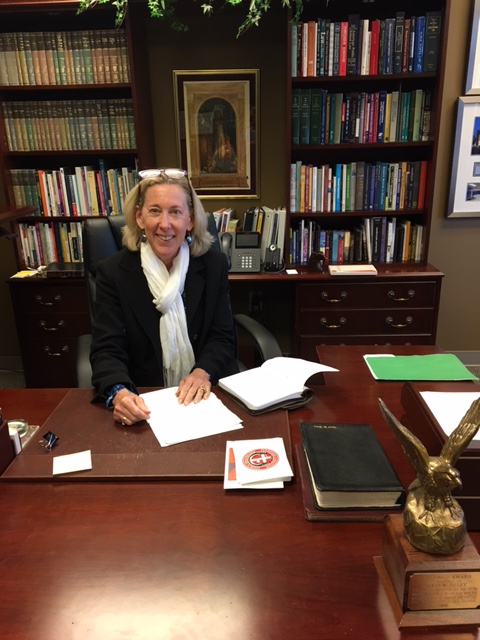
So you want to be a writer? 5 steps to make it happen.
I have published 9 books, and I sell them at our local craft market. I love interacting with all the people who stop by, and there is always at least one person who asks me about how to be a writer. Here are the 5 basic steps that I tell them.
Every book or article needs a why. Your why is your goal and your motivation. Your why will keep you writing when you start to question your ability to write, and whether the time you are devoting to the task is wasted effort.
I have four children’s books. I wrote them to be a legacy for my grandson, Parker. I want him to look back on the books and realize how loved he was. My husband loves it because not many children can say they have four children’s books about them when they present at show and tell.
My why for my self-help books was because of all the need and hurt I see around me. I wanted to write something that offered comfort and encouragement.
What is your plan? Your plan is your how. How will you take your ideas and put them on paper? There isn’t a right or wrong way to do this. My dad used to have a recorder in his car, and he would record any thoughts he had when he wasn’t where he could write them down. I usually use a whiteboard to write down my ideas and a loose outline.
Research what you need to know about different genres. I had no idea how to write a children’s book, so I asked my publisher questions, and he guided me through the first one.
Who will publish your writing? There are several different ways to publish. A traditional publisher will help guide you through edits and will publish the book. Some traditional publishers will pay you while others only give you royalties from what you sell. Others are print on demand. Be careful of vanity publishers. These are publishers who ask for payment to publish. Self-publishing is another option, and one spot to do that is through Amazon’s KDP program.
What is your marketing plan? After you publish your book, you have to encourage people to buy it. You can use social media and sell at local craft markets.
Stay mental. This is probably the most important part because if you do not believe in your writing, you will not finish anything. Just do it!
I hope these ideas help you to begin your journey as a writer. If writing is something you are passionate about, you should do it.
How to make your day great

How to Make Your Day Great
I was reminded that having a great day is not a passive activity when my watch sent me a message that said, “Make it a great day.”
Whenever my students entered my classroom in a bad mood, I would tell them it was up to them to change the course of the day, but how can you do that? Here are a few ideas.
- Delay leaving bed. Instead of jumping out of bed, give yourself a few minutes to wake up. Think about what you will do today, send positive thoughts and prayers, and start easing into the day.
- Prepare for your day the night before. Your morning will be less stressful if you have everything ready. The less you have to do in the morning, the calmer your morning will be.
- Let some things go. Don’t allow anyone or anything to steal your peace. Before you allow drama to affect you, ask yourself why it matters. If it doesn’t, then don’t allow it to affect you.
- Do at least one act of kindness. Doing something nice for someone can start a domino effect, and you will feel good doing it.
- Know how to pivot. Being flexible instead of reacting to setbacks will make your day much better.
- Be a model for others. You have no idea how much you can help someone by the way you act.
You have the power to control your day. Choose to have a good one!
Fall Newsletter
Fall is a great time for reading
Fall is a perfect time to curl up on the couch under a blanket with your favorite books. I have written a few that I would like to suggest to you.
I just published a romance called A Hidden Treasure. It takes place in Regency England, where Emily Randal must deal with the challenges that many women of her time also face. She is expected to marry, but she finds her choices to be lacking, until her childhood friend, Rylan, steps back into her life. She could lose her family’s home to her nefarious cousin, and before that happens, she wants to find the famous treasure her great-grandmother hid as she tried to protect her family and home.

I have another new release called Help for the Hard Days. This is a series of essays to encourage you on those difficult days.
My fourth children’s book will be released very shortly. It is called Parker and the Boys Next Door, The Importance of Friendship.

These books and all the rest of the books I have written can be purchased on Amazon.
Ultra-Marathon advice that saves me

The ultra-marathon advice that saved me
I learned how to navigate the ultra-marathon world by making every possible mistake but learning from each one. Finally, I decided to add the expertise of an ultra-expert to the lessons I have learned, so I asked my friend to share everything he knows about ultras. The result was three pages of notes, and the feeling that I was finally prepared to take on this beast, which is unlike any other race. Here are a few pieces of advice that have saved me more than once.
You can do almost anything one more time. Instead of looking at the total mileage ahead, take it one mile at a time. I mostly do loop ultras, so I tell myself to do one more loop, and then I can see how I feel; then I continue to do that.
You have to know how to fuel the machine. Experiment with various foods and drinks to determine what works best for you. I cannot drink the typical electrolytes offered at races because they are too strong for my stomach, so I had to find something gentler. I alternate between drinking that and water. I eat half of a peanut butter sandwich before the race starts, and I eat something every hour to continue replacing the calories I am burning. When I reach higher mileage, I often feel slightly nauseous. When that happens, I eat 5 ginger cookies, and that calms my stomach. My two worst experiences were related to my stomach. The first incident occurred because I didn’t take in any electrolytes, and the second was due to my stopping eating. Neither was a good decision.
Use mental techniques to keep going. When you hit the wall and the negative voices start to overtake your mind, have some ways to get motivated again. It could be as simple as telling yourself, ‘If you can do one more lap, you can take a break and eat a bag of Fritos.’ Another idea is to make yourself run to a certain point and keep changing the spot.
Taking short rest breaks can help you become stronger. When I first started running ultras, I wanted to attack it. I didn’t want to stop to rest because I wanted to get the best mileage I could. I felt that resting would be wasted energy. I didn’t realize how much rest could improve my performance.
Run your own race. Don’t compare yourself to other runners. Focus on doing your best, and do what works for you.
Realize that an ultra is a different race. Very few of the rules that work for shorter races will work for an ultra. Be a good observer as you watch what the veteran runners do and listen well as you ask questions of the other runners.
Pickle juice is your friend. I was skeptical when a friend told me pickle juice could keep me from being too sore, but it actually works! I take small sips throughout the race, or I eat the actual pickles.
Be ready for anything. Most ultra runners look like they have enough gear to camp for a week, but it’s because they know they have to be ready for anything. If the race is on trail, I’m bound to fall, so a good med kit is necessary for me. I have been at races where it was pouring one minute and then scorching hot the next.
I hope this advice helps you at your next race!
Keep Your Weapons Sharp
Do you ever feel like life is a war where you are only doing your best to survive? Those are the days when you need to know what your weapons are, and what is the best way to use them.
I’m not talking about guns and swords, or other methods of violence. I’m talking about words and actions you can use to protect your peace, motivate yourself, and find happiness. Here are a few ideas that work for me.
Remember, you have more power than you think in your interactions. You might not be able to choose what happens to you or some of the situations you encounter, but you always have the choice on how to respond.
There are certain personality types where someone loves to argue, so you will walk away from these arguments shaking your head and asking yourself what just happened. These people love drama, and they will take any excuse to engage in it. Your weapon in this case is to not engage. Have a set of phrases ready that give a non-committal response. If you jump in with both feet, you will come out bloodied emotionally. Rest in the assurance that proving you are right is not worth it.
You have to draw boundaries to show people how to treat you. There should be no discussion except for a clear description of what those boundaries are. If the boundaries are not respected, it’s time to distance yourself.
You need to take time to heal. Every warrior needs to take time to regroup, rest, and recharge. You will always come back stronger if you take time to heal. Do what fills you and gives you peace. Movement of any kind has always helped me. I also find peace through reading, writing, and music.
Realize that someone’s opinion doesn’t have to be the truth. Have you ever been in a situation when someone criticizes you and you start to ask yourself if you would act that way even though the claim is outlandish? Just because someone has an opinion about you, it doesn’t mean it’s true, so carry on with your bad self.
There are so many situations that can steal our peace, so sharpen your weapons before you need them, so that when the need arises, you are prepared.
5 Ways Your Phone Controls You
If you are a person of a certain age, you remember life before cell phones. We used landlines to call people, we used maps to navigate highways, and texting didn’t exist. We went to the theater to watch movies, and television was only viewed on a television.
When portable phones appeared, all of that changed, but it changed gradually, seeping into our lives, making things more convenient, and we saw all the benefits. Unfortunately, there is a dark side to cell phones in our lives. They have become everything to us, to the point that we cannot imagine leaving home without our phones. They have slipped into our lives, and they control us to a certain point. Here are 5 reasons why our phones control us.
Your phone knows you. Your phone is always collecting data about you. How many times have you had a conversation with someone, and after that conversation, videos and articles start to appear around what was said?
I also notice that when I browse online, whatever I was looking at suddenly pops up all over my feed.
Your phone finds out your interests and your likes and uses that knowledge to keep you interested.
It gives you what you want. I argued with my daughter, and suddenly the reels on social media were all about having issues with family members. It was as if my phone was giving me validation that I wasn’t at fault in the argument.
Because it knows so much about you, your phone provides you with the videos, music, and ads you want.
Your phone isolates you. Have you ever seen a family at a restaurant where everyone is on their phone instead of engaging in conversation? It is an escape, but it is also isolation because you are interacting with a machine instead of people.
It becomes indispensable. I was in the car on my way to an appointment when I realized I didn’t have my phone. I panicked. What would happen if I had an accident? What would I do to amuse myself while waiting for the appointment? We rely on our phones for almost everything.
It leaves you wanting more. Have you ever been watching videos and realized it’s late, but you tell yourself you will watch just one more, then one more? How long can you go without looking at your phone?
Most of us can agree that our phone controls us, but our phones have become a toxic convenience, so how do we draw healthy boundaries about how much time we spend on our phones?
 Jennifer’s writing